

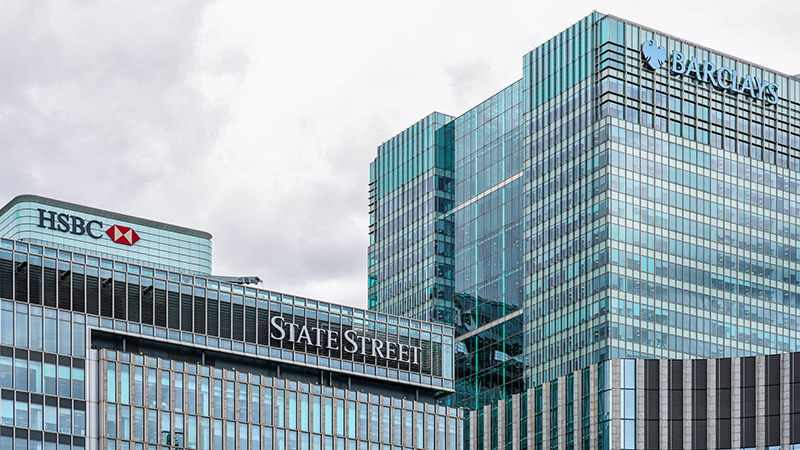







In a move widely expected by financial markets, Chancellor John Healey has confirmed he is turning to banks to help provide breathing space for citizens in today’s Autumn Budget.
Earlier this week, Russ Mould, investment director at AJ Bell, said: “Banking shares took a hit after speculation that Chancellor John Healey would increase tax on the sector.
“Barclays, Lloyds and NatWest all saw their share prices fall after reports that Healey might increase the current 3% surcharge on top of corporation tax back to the 8% level last seen in 2023, he said earlier this week.
The chancellor has boosted the bank’s surcharge by a further 3%, bringing it to a total of 6%. This still stays just below the former 8% before it was cut under Conservative Chancellor Jeremy Hunt.
“Our world leading banks make a huge contribution to this country; in the tax they pay, in the jobs, industry and investment they support,” Healey said. “I celebrate and am grateful for the role you play. I am looking to the banks to help fund breathing space to the British families.”
The boost will be time limited, starting in January and ending 15 months later.
At the time of writing, the FTSE All Share is roughly flat according to data from google finance. Shares in HSBC are currently roughly flat, while Natwest, Lloyds and Barclays all rose.
Angeline Ong, senior technical analyst at trading platform IG, said: “”UK banks including NatWest, Lloyds and Barclays rallied further after Healey’s announcement, as the measure proved gentler than the market had feared.”
The fixed end date matters as much as the size, because it turns a potential reset of bank earnings into a one-off charge, and investors appear to be reading it as a bump rather than lasting damage to their earnings base.”
Susannah Streeter, chief investment strategist at Wealth Club, was notably more negative arguing it had added further complexity to already difficult tax landscape.
“Increasing the bank corporation tax surcharge to 6% from 3%, albeit for only 15 months, will eat into banks’ profitability and investment capacity, with some of the cost potentially passed on to customers through higher borrowing costs or less attractive savings rates.”
She also noted that making the tax regime more punitive risks undermining the competitiveness of the UK as a financial centre.
“It reinforces the perception that the Government talks the talk on being pro-growth and pro-business but struggles to walk the walk when the pressure is on to raise revenue.
“If the Chancellor wants banks to support growth, changing the tax goalposts yet again sends precisely the wrong message.’’